
Helping children develop neat handwriting starts with regular practice, patience and the right learning materials. A cursive handwriting workbook for kids can give young learners a structured way to practise letters, words and sentences while building their writing confidence.
If you are looking for a handwriting practice book for your child in LKG, UKG or Grades 1–2, My Fun Cursive Writing Workbook from Bright Brain Publications is one option to explore.
Why Is Handwriting Practice Important for Children?
Handwriting is a skill that develops through consistent practice. Young learners benefit from activities that introduce writing gradually and allow them to repeat letters and patterns at their own pace.
Regular handwriting practice can help children:
- Become more familiar with letter shapes.
- Practise forming uppercase and lowercase letters.
- Develop greater control when writing with a pencil.
- Build confidence through repeated practice.
- Progress from individual letters to words and sentences.
Every child learns at a different pace, so encourage short, enjoyable practice sessions rather than expecting perfect handwriting immediately.
Meet My Fun Cursive Writing Workbook
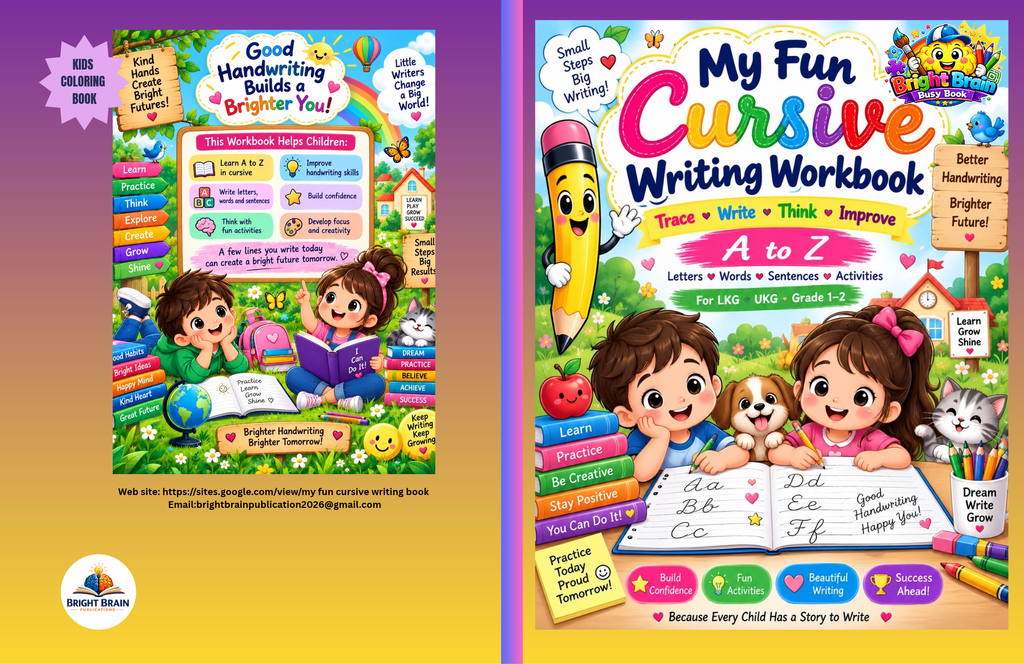
My Fun Cursive Writing Workbook – A to Z is a children’s handwriting practice workbook from Bright Brain Publications.
Designed for learners from LKG and UKG through Grades 1–2, the workbook brings together cursive letters, words, sentences and activities in a colourful, child-friendly format.
What Can Children Practise?
1. Uppercase and lowercase cursive letters
Children can practise the alphabet and become more familiar with cursive letter formation.
2. Word and sentence writing
After practising individual letters, young learners can work towards writing words and simple sentences.
3. Guided writing practice
A structured workbook gives children a place to practise regularly and revisit letters they find difficult.
4. Fun learning activities
A colourful presentation and activity-based approach can help make handwriting sessions more inviting.
Who Is This Workbook Suitable For?
This workbook is intended for:
- LKG students beginning early writing activities.
- UKG students practising letter formation.
- Children in Grades 1–2 developing handwriting skills.
- Parents looking for additional handwriting practice at home.
- Teachers and tutors seeking supplementary writing activities.
Parents should choose practice activities that match their child’s current writing ability and school curriculum.
How to Help Your Child Practise Cursive Writing at Home
You can make handwriting practice a simple part of your child’s daily routine.
Step 1: Create a comfortable writing space
Choose a table with good lighting and provide a suitable pencil and eraser.
Step 2: Begin with a few letters
Practise a small group of letters instead of asking your child to complete too many pages at once.
Step 3: Demonstrate the letter formation
Show your child how to form each letter, then let them try independently.
Step 4: Encourage steady practice
Start with a short session of around 5–10 minutes, adjusting the duration to your child’s age and attention span.
Step 5: Praise progress
Celebrate effort and improvement. Avoid comparing your child’s handwriting with that of other children.
Why Choose a Dedicated Handwriting Workbook?
Loose sheets can be useful, but a dedicated workbook keeps practice organised in one place. Children can return to earlier exercises, practise at their own pace and build a consistent routine.
My Fun Cursive Writing Workbook offers an A to Z practice format with letters, words, sentences and activities for young learners.
It can be used alongside schoolwork and adult guidance; it is not a replacement for individual teaching when a child needs additional support.
Where Can You Find My Fun Cursive Writing Workbook?
If you are searching for a cursive handwriting workbook for kids, explore My Fun Cursive Writing Workbook by Bright Brain Publications.
Check the available book listing for the latest price, format, delivery details and purchasing options.
Give your child an enjoyable opportunity to practise, learn and grow—one letter at a time.
Note: Writing progress varies from child to child. Regular practice and encouragement are important.